The Ubisoft Maps We Could Navigate Blindfolded
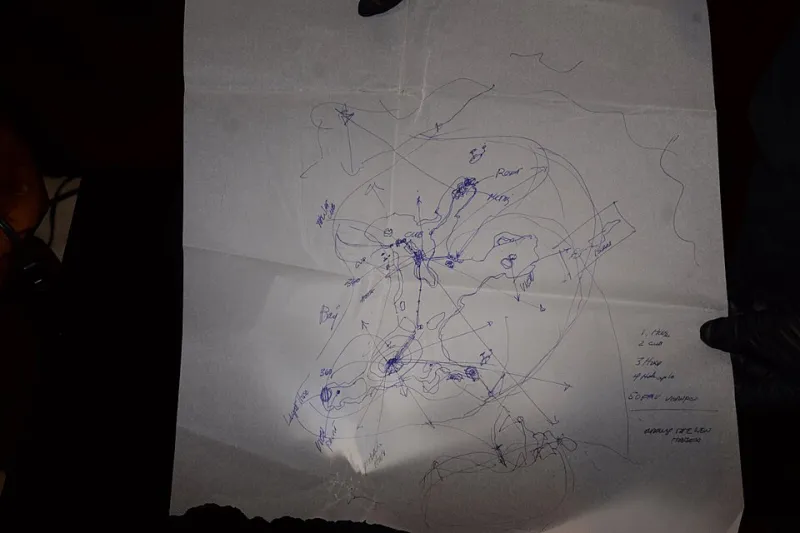
Photo: Federal Bureau of Investigation, Public domain, via Wikimedia Commons
Ask your squad to describe a Ubisoft map without looking at a screen, and watch what happens. Someone starts drawing invisible hallways in the air. Someone else names a stairwell like it is a childhood street. That is map memory: the point where a level stops being geometry and becomes shared language.
What makes a map stick
Not every good map becomes a mental map. The ones that stick usually have three things: a landmark you can see from anywhere, a flow that teaches your feet where to go, and a moment of stakes that makes the layout matter. A pretty map is nice. A map that makes you yell 'he is behind the thing' to your friends is family.
Ubisoft has built a lot of those over the years. Here are the ones that show up most often when a crew starts trading callouts like old stories.
Rainbow Six Siege: Oregon
Oregon is the map that turns new players into callout machines. Dorms, meeting, kitchen, basement, the little rotations that feel obvious after a hundred rounds and impossible on day one. It is not just popular because it is balanced. It is popular because it has a rhythm. You learn where the fights happen, where the roamers hide, and which wall is about to become a very loud problem.
Ask a Siege squad to draw Oregon from memory and you will get five different maps. One person will draw the basement perfectly. Another will get the second floor right and turn the first floor into abstract art. That disagreement is the point. Everyone remembers the part they were forced to learn.
Rainbow Six Siege: Clubhouse
Clubhouse is a map that feels like a building with opinions. The garage, the bar, the CCTV room, the basement. Each area has a personality, and each one teaches a different lesson. Garage is about holding a line. Bar is about vertical pressure. CCTV is about the kind of fight that makes you check the clock.
Clubhouse sticks because it is easy to describe and hard to master. You can explain the map to a new friend in a sentence. You cannot explain why your squad still loses the same hallway fight in a paragraph. That gap is where the memories live.
The Division: the Dark Zone
The Dark Zone is not a single map so much as a mood with alleys. But ask a Division player about extraction points, checkpoints, and the route they take when their bag is full and their hands are sweating, and you will get a mental map fast. The layout matters because the stakes are personal. You are not just learning a street. You are learning where you got jumped, where you got away, and where you swore you would never go alone again.
That is a different kind of map memory. It is less about callouts and more about scar tissue. The Dark Zone is the reason some players can navigate a fictional city block better than their own downtown.
For Honor: Citadel Gate
For Honor maps live in a smaller space. You do not need a full floor plan. You need to know the lanes, the ledges, the spots where a duel turns into a chase, and the places where the environment is basically a third fighter. Citadel Gate has that quality. It is readable from the first match and still capable of surprising you in the tenth.
A good For Honor map sticks because the action is so close. You remember the exact spot where you got parried into a wall. You remember the ledge you should not have trusted. The map becomes a memory palace for bad decisions.
Far Cry outposts and the solo mental map
Not every mental map is multiplayer. Far Cry outposts are built for the player who looks at a fence line and thinks, 'I can take the high ground, tag two guards, and start a fire on the left.' You learn the compound before you ever step inside. You draw the route in your head. Then it goes wrong, and you draw a new one while running.
That is the solo version of map memory. It is quieter, but it counts. A great outpost teaches you to read a space, and that skill follows you into every co-op session you play with friends.
Trackmania: the track in your hands
Trackmania is the purest version of this idea. The map is not a place you walk through. It is a sequence you feel. The first turn, the jump, the corner that punishes you for breathing wrong. Ask a Trackmania player to describe a favorite track and they will not draw a picture. They will describe a rhythm.
That is map memory too. It just lives in your hands instead of your eyes. And it is maybe the best reminder that Ubisoft maps are not only about where things are. They are about what your body expects to do next.
Compare your mental maps
Here is the fun part. Get your squad together and try to draw one of these maps from memory. No peeking. Give everyone a piece of paper or a shared screen and let them sketch. You will learn more about your friends than any ranked match can teach you.
The trophy hunter will draw every objective marker. The vibe player will draw only the spot where the funniest thing happened. The competitive player will draw the rotation routes. The casual player will draw the snack table. All of those are valid maps. That is what makes a great map culture: the same space, remembered a hundred different ways, and a crew that keeps coming back to compare notes.