Stop Watching, Start Playing: Why Ubisoft Games Hit Harder When Everyone's in the Room

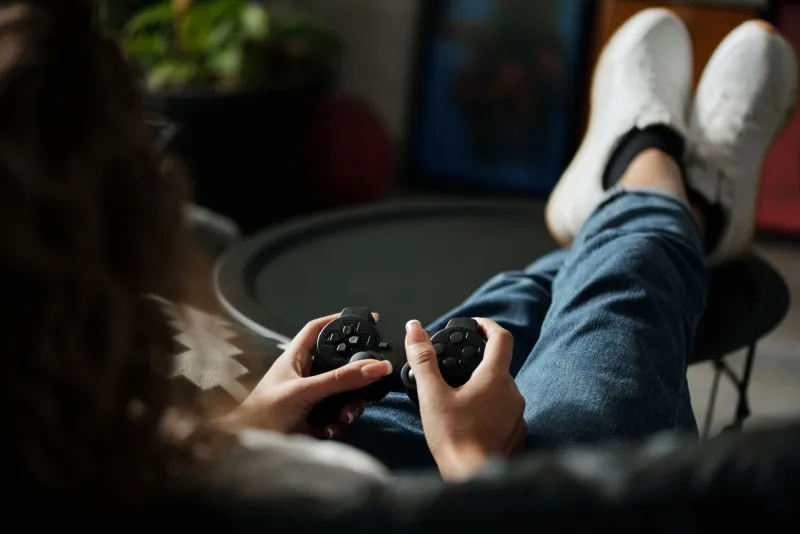
Photo by Photo by Vitaly Gariev on Unsplash on Unsplash
Let's be honest for a second. How many hours have you spent watching someone else play a game you own? Sitting on a couch with a bag of chips, watching a streamer tear through Rainbow Six Siege or grind out The Division 2 while you nod along like you're part of it? It feels social. It kind of looks like gaming. But it's not — and deep down, you probably already know that.
The rise of streaming culture has done something sneaky to the way a lot of us relate to games. It's made spectatorship feel like participation. And while there's nothing wrong with catching a stream when you're winding down, there's a growing number of players who are starting to feel the gap between watching and being there — especially when it comes to Ubisoft's multiplayer lineup.
The Illusion of Being In the Lobby
Streaming platforms are genuinely good at manufacturing a sense of presence. Chat moves fast. You can react in real time. Some streamers even read your comments out loud. It scratches a social itch without requiring you to actually do anything. Psychologists call this kind of one-sided connection a parasocial relationship — and it's not inherently bad, but it does have a ceiling.
The problem is that no amount of chat interaction puts you in the game. When a streamer's squad wipes in Far Cry co-op or pulls off a perfectly timed extraction in The Division, you get to watch the celebration. You don't get to be part of it. That distinction matters more than most people admit. The human brain processes shared physical experiences differently than observed ones. The memory formation is different. The emotional investment is different. The story you tell your friends afterward is completely different.
With Ubisoft's library specifically — games built around teamwork, communication, and shared chaos — the gap between watching and playing is enormous.
What Actually Happens When You're All in the Same Room
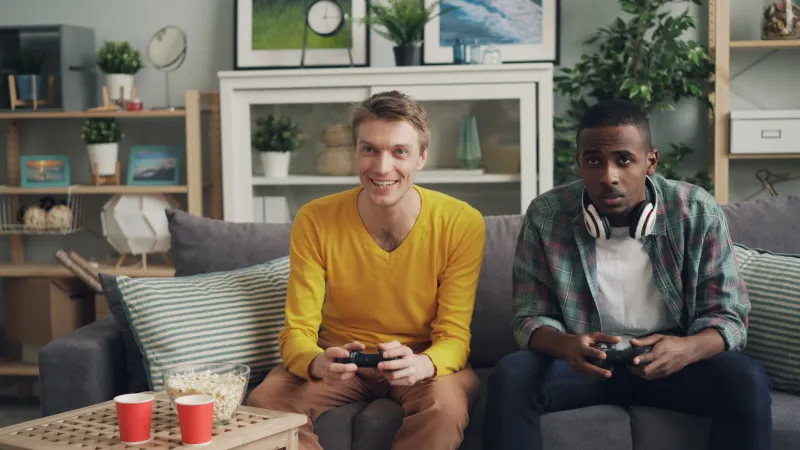
Here's something you can't get from a stream: the moment your buddy grabs the controller out of your hands because he swears he can land the shot better, and then completely misses, and the whole room collapses. Or the shared panic when a mission goes sideways in Ghost Recon and everyone's shouting a different strategy at once. Or the silent, unspoken satisfaction of a synchronized play where nobody had to say a word.
These moments aren't just fun — they're sticky. They become inside jokes. They become the reason your crew keeps coming back. The research on this is pretty consistent: shared physical experiences, especially ones involving mild stress, competition, or surprise, create stronger social bonds than passive shared experiences. Watching something together is fine. Doing something together is foundational.
Ubisoft has quietly built one of the better local and couch co-op libraries in the industry. Rayman Legends, Riders Republic, Scott Pilgrim vs. the World: The Game, Immortals Fenyx Rising — these titles don't just tolerate a second player in the room; they're genuinely better with one. The games are designed with shared energy in mind, even when the couch play is optional.
The FOMO Flip
Streaming culture runs on FOMO. You tune in because something might happen, because the community moment might be happening right now, because missing the drop or the clip means being out of the loop. It keeps you engaged through anxiety as much as excitement.
Local multiplayer flips that completely. You're not afraid of missing something — you're creating something. There's no clip to catch up on later because the moment was just for the people in that room. That exclusivity isn't a loss; it's the whole point. The best gaming memories most people have aren't from watching — they're from the nights where the pizza was cold by the time anyone remembered to eat it because the session got that good.
There's a reason "lounge culture" is having a quiet resurgence in gaming circles. Smaller gatherings, physical space, actual eye contact — it sounds retro, but it's filling a gap that no streaming platform has managed to close.
Why Ubisoft's World-Building Rewards Physical Presence
One thing that makes Ubisoft titles particularly well-suited to in-room play is their scale and visual density. These are games designed to be impressive. The open worlds of Assassin's Creed, the tactical environments of Siege, the kinetic energy of For Honor — they're built to provoke reactions. And reactions are about 10 times better when there's someone next to you to share them with.
When you're streaming, you're watching someone else react. When you're in the room together, you're both seeing it for the first time, or experiencing it differently based on where you're standing in the fight. That asymmetry of perspective — "wait, you saw that from your side?" — is something you literally cannot replicate remotely.
Making the Switch Without Overthinking It
If your gaming habits have drifted toward solo play and passive streaming, you don't need a massive intervention. Start small. Pick one night. Pull out a Ubisoft title that supports local co-op or has enough visual chaos to make spectating in-person actually fun. Invite two people. Feed them something. See what happens.
The lounge isn't dead. It just got quiet for a while. And honestly? Ubisoft's library is a pretty great reason to bring it back.
Your crew doesn't need to be online to be your crew. Sometimes they just need to be on your couch.