The Curfew Contract: Closing Out Ubisoft Nights Before 'One More' Turns Sour
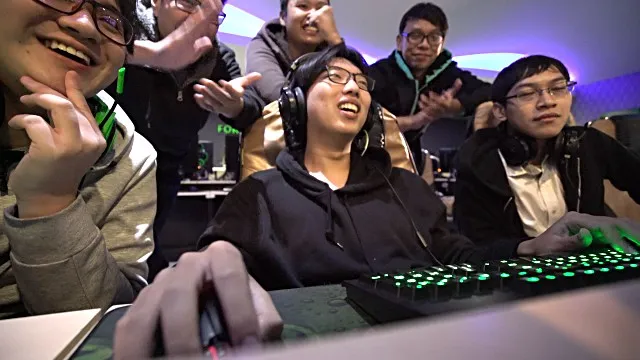
Photo: Lyncconf Games, CC BY-SA 4.0, via Wikimedia Commons
It is 11:42 p.m. The party has been rolling for three hours. Someone clears their throat and says the words every host dreads: 'One more?' You look at the clock, then at the squad list, then back at the clock. You have work tomorrow. Two people have gone quiet. One person is clearly tilted. And yet the lobby sits there, glowing, waiting for somebody to be the bad guy.
This is where the 15-minute rule earns its keep. Not as a rigid parent-style curfew, but as a simple host tool that turns the end of a Ubisoft night into part of the fun instead of an awkward standoff. The idea is straightforward: about 15 minutes before you actually want to log off, you stop opening new matches. You finish what is on screen, you run a small closing ritual, and you leave the lobby on a high note. No endless queue. No silent resentment. No 1 a.m. Rainbow Six Siege rematch that nobody actually wanted.
The Rule Is Not 'Stop Playing.' It Is 'Stop Starting.'
The 15-minute rule works because it separates two decisions that usually get mashed together: whether to keep playing and whether to start something new. At the 15-minute mark, the answer to the second question becomes no. That means no new ranked queue in Siege. No fresh mission chain in The Division 2. No 'quick' For Honor duel bracket. No new Far Cry outpost unless the crew has already agreed it is the final one.
What you can still do is finish the match, mission, or race you are already in. That matters. People hate being yanked out mid-round, and a hard cut feels less like a clean ending and more like the Wi-Fi died. The rule protects the current game and blocks the next one.
Announce it early, too. A host who says 'hey, I am calling last match at 11:45' at 11:30 is a hero. A host who announces it at 11:44 is a villain in a hoodie. Give the crew time to adjust. Let the person who is chasing a daily challenge know they have one more shot. Let the friend who always says 'after this one' actually plan for it.
Host Exit Cues That Do Not Feel Like a Buzzkill
The best exit cues are boring on purpose. They are clear, repeated, and impossible to misread. Try a simple countdown in voice chat: 'All right, this is the last one. After this we are wrapping.' Then, when the match ends, say it again: 'That was the last one. Good night, crew.' Repetition is not nagging. It is information.
Use the game itself when you can. In a Ubisoft lobby, the party screen and queue timer are shared furniture. Ask everyone to back out to the main menu together. It is harder to accidentally requeue when the group is already standing in the lobby. If you are hosting, set your status to something like 'last match' or send a party message. A little label goes a long way.
Rotate the closing duty, too. If one person always has to be the enforcer, that person starts to feel like a chaperone. Let somebody else call last match next time. Make it a running joke: who gets the whistle tonight? The crew stays accountable, and the host does not become the human alarm clock.
Build a Last-Match Ritual
A closing ritual gives the night a shape. It can be as simple as one final round of the same mode, one silly custom match, or one co-op mission everyone knows by heart. In The Division 2, maybe it is a quick bounty run. In For Honor, maybe it is a best-of-three duel with no stakes. In a racing game, it is one last point-to-point sprint. The content matters less than the signal: this is the goodbye lap.
Keep the ritual short and low-stakes. The last match should not be the most stressful match. Do not end on a ranked promotion game or a 40-minute raid attempt unless everyone explicitly signed up for that ride. The goal is to leave people smiling, not staring at a defeat screen wondering why they are still awake.
A post-game debrief helps, too. Spend two minutes talking about the best moment of the night. Someone's clutch, someone's terrible grenade, the bug that made everyone laugh. Then close the party. That tiny wrap-up turns a random session into a shared story, and shared stories are what bring the crew back.
Why a Firm End Time Makes the Next Night Better
Here is the counterintuitive part: ending on time does not reduce how much people play. It protects the habit. A crew that regularly stays too late gets cranky, misses sessions, and starts treating game night like a chore. A crew that ends while everyone still has a little energy left is a crew that shows up next week.
Fatigue also changes behavior. Tired players get quieter, snappier, or sloppier. That is when the 'one more' spiral turns toxic. The match that started as a joke becomes a grudge. The lobby that was laughing ten minutes ago goes silent. A clean exit is not just polite. It is preventive maintenance for the squad.
The 15-minute rule also gives you a built-in excuse. You do not have to invent a reason. You do not have to wait for someone to get annoyed. You just point at the clock and say, 'Curfew contract.' Everyone knows the deal. The host is not rejecting the crew. The crew is protecting the next night.
So the next time the lobby is humming and somebody whispers 'one more,' smile and say, 'This is the last one.' Then finish it, wrap it, and log off like a person who plans to come back. That is not a buzzkill. That is a good host.